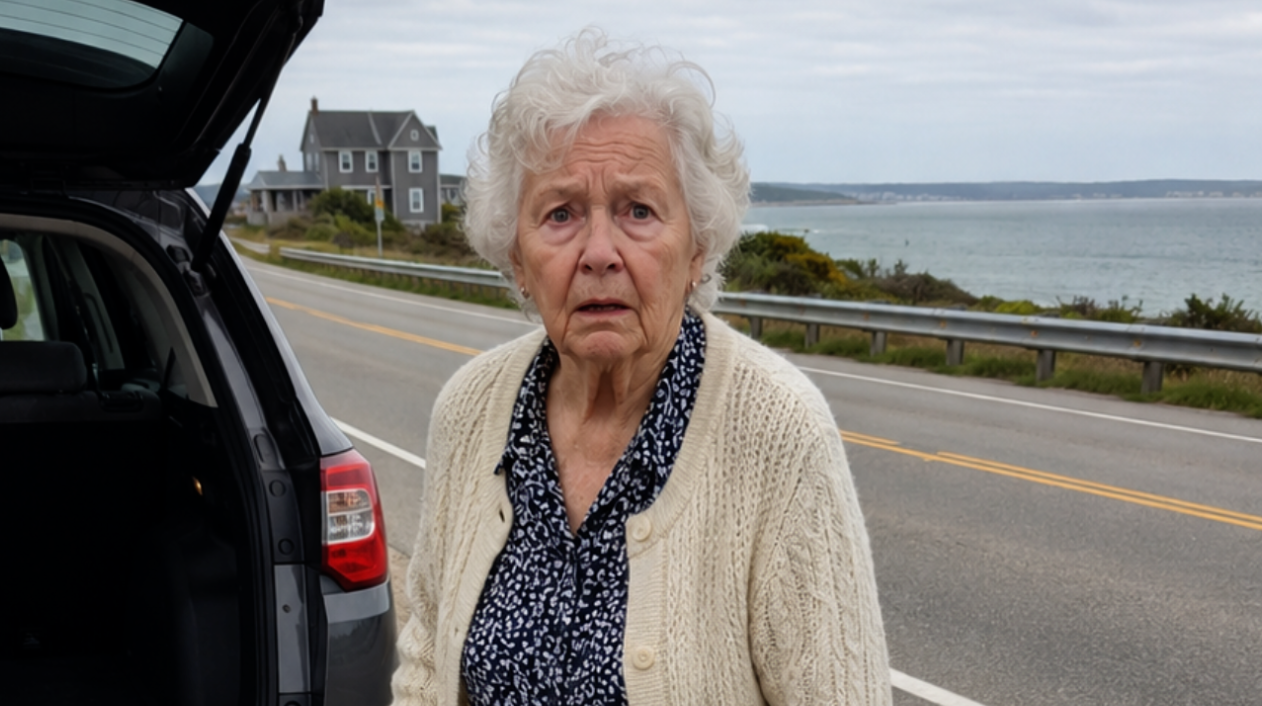
It was a frigid Tuesday morning, exactly one week before the holiday season was scheduled to reach its usual, chaotic crescendo. Celia Johnson, a sixty-seven-year-old widow who had spent the last twelve years cultivating a life of quiet service to her family, stood in the warmth of her kitchen. She was in the midst of her daily ritual—brewing a dark roast coffee, listening to the rhythmic drip of the machine, and watching the winter frost trace delicate patterns across the windowpanes. It was a peaceful moment, the kind of fleeting tranquility she rarely experienced when her family was around.
The silence of the house was abruptly pierced by voices drifting down the hallway from the living room. It was her daughter, Amanda. Celia assumed Amanda had stopped by before work, as she often did, using her mother’s home as a convenient pit stop. Amanda was on her cell phone, and her tone was incredibly light, breezy, and casual—the specific cadence of someone discussing a minor weekend errand or a mundane shopping list. Celia picked up her ceramic mug and walked slowly toward the doorway, careful not to make a sound. Something in the absolute carelessness of her daughter’s voice made her hesitate in the shadows of the hall.
Then, the words cut through the air, sharp and unmistakable.
“Just leave all eight grandkids with her to watch and that’s it,” Amanda said, letting out a soft, dismissive laugh. “She doesn’t have anything else to do anyway. We’re going to the hotel and we’ll have a peaceful time.”
Celia felt the floorboards practically dissolve beneath her slippers. She stood absolutely paralyzed behind the doorframe, her knuckles turning white as she gripped her coffee mug. She tried desperately to process the sheer audacity of what she had just heard. It was not a secret that her family relied heavily on her, but the profound cruelty of the assumption—that her existence was entirely devoid of purpose outside of their convenience—was a staggering revelation.
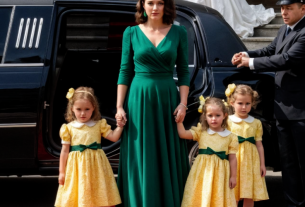
Amanda continued chatting, her voice dripping with entitled satisfaction. “Yeah, Martin already booked the hotel at the coast. We’re going to take advantage of these days without the kids. Robert and Lucy agree, too. They’re going to that resort they’ve always wanted to visit. Mom has experience with all eight of them. Plus, she already bought all the gifts and paid for the entire dinner. We just have to show up on the 25th, eat, open presents, and that’s it. Perfect.”
“Perfect for them. Perfect for everyone but me.”
Celia carefully retreated into the kitchen. She set the mug down on the granite countertop with trembling hands. She wasn’t shaking from sorrow or heartbreak; she was trembling from an ancient, volcanic rage that had been dormant for decades.
Moving with a heavy, deliberate slowness, Celia climbed the stairs to her bedroom. Each wooden step seemed to echo with the weight of every past holiday, every forgotten birthday, and every family gathering where she had been treated as little more than part of the catering staff. She closed her bedroom door and sat on the edge of her mattress, staring blankly at the walls.
The room was a shrine to her family. Framed photographs plastered the walls, documenting graduations, school plays, and holiday feasts. Yet, as Celia truly looked at them for the first time, a disturbing pattern emerged. In every single image, she was relegated to the background. She was the one holding a platter of food, the one picking up wrapping paper, the one wrangling a crying toddler. She was never the center of the celebration. She was the infrastructure that allowed the celebration to happen.
She walked over to her expansive walk-in closet. Tucked carefully in the back were dozens of vibrant, glossy shopping bags. Inside were the fruits of three months of meticulous planning and budgeting: eight perfect gifts for her eight grandchildren. She had purchased expensive educational tablets, winter coats, and elaborate building sets. The total expenditure had exceeded twelve hundred dollars. This was money pulled directly from her fixed, modest pension—funds she had painstakingly saved just to see them smile.
On her oak dresser sat a crinkled receipt from Central Market. She had already prepaid for a massive holiday feast meant to feed eighteen people. The turkey, the artisanal side dishes, the imported wines, and the gourmet desserts had cost her an additional nine hundred dollars. No one had offered to split the bill. No one had even asked her if she could afford it. They simply expected it.
Memories of the previous Christmas washed over her, bitter and exhausting. She had spent forty-eight consecutive hours on her feet, her kitchen resembling a commercial restaurant during a dinner rush. Amanda and Martin had arrived an hour late, inhaled their food without a word of praise, and bolted out the door to attend a neighborhood cocktail party. Her son, Robert, and his wife, Lucy, had mirrored this behavior, dumping their five children in the living room before disappearing to a friend’s gathering. Celia had been left alone until past midnight, bathing toddlers, assembling toys, and inflating air mattresses, all while the parents drank champagne elsewhere.
Celia opened her eyes, blinking away the ghosts of Christmases past. Something fundamental within her spirit snapped. It was not a loud, dramatic break, but rather the quiet, definitive fracturing of a woman who finally realized she had been living a life entirely authored by selfish people.
She stood up, her posture straighter than it had been in years, and walked over to the telephone resting on her nightstand. She scrolled through her contacts until she found the name of her oldest, dearest friend: Paula Smith. Just a week prior, Paula had extended a warm invitation to spend the holiday at a quiet, rented cottage in a sleepy coastal town. Celia had instantly declined, bound by her invisible chains of familial obligation.
The phone rang three times before Paula’s bright voice answered.
“Celia! What a wonderful surprise. How are you?”
“I’m making some changes, Paula,” Celia said. She was stunned by the firm, unwavering timbre of her own voice. “Tell me, is your invitation for Christmas still open?”
There was a brief, perceptive silence on the other end. “Of course it is,” Paula replied softly. “Did something happen?”
“I have simply decided that this year, I want to do things differently. I want to spend the holiday somewhere peaceful. I want to actually enjoy the season instead of working myself to the bone through it.”
“That sounds absolutely brilliant,” Paula said warmly. “We will leave on the morning of the 23rd. It’s a tiny coastal village. No pressure, no schedules, just the ocean and good company.”
When the call ended, Celia looked down at her hands. The invisible weight that had anchored her shoulders for decades had miraculously vanished. She had just given herself permission to exist for her own sake.
The following morning, Celia awoke with a laser-focused sense of purpose. At exactly eight o’clock, she picked up her phone and dialed the local premium grocery store.
“Central Market, how can I help you today?” a cheerful clerk answered.
“Good morning. I am calling to completely cancel a large holiday catering order under the name Celia Johnson.”
Keys clacked on a keyboard in the background. “Ah, yes. I see it here. A very large order. Turkey, sides, desserts… totaling nine hundred and twelve dollars. Ma’am, are you absolutely certain you want to cancel the entire order?”
“I am completely certain. Please refund the card on file.”
Celia hung up the phone. She felt a thrilling rush of adrenaline. Next on her agenda was the mountain of gifts hidden in her closet. She gathered the bags, loaded them into the trunk of her sedan, and embarked on a strategic tour of the city’s department stores.
Celia marched from customer service desk to customer service desk. Some retail workers offered her puzzled glances—an elderly woman returning stacks of children’s items days before the holiday—but Celia paid them no mind. By mid-afternoon, she had successfully recovered the vast majority of her funds. Two items lacked receipts, so she promptly drove to a local parish and dropped them into the Christmas donation bin, ensuring they would go to families who might actually appreciate a grandmother’s love.
She returned home physically exhausted but spiritually invigorated. She sat at her kitchen table and drafted a concrete list of her next steps.
Over the next forty-eight hours, Celia lived in a state of surreal, suspended animation. Amanda called twice, utilizing her typical demanding tone to “confirm” that everything was ready for the children’s arrival. Celia simply replied, “Everything is under control,” which was the absolute truth. Robert sent a deeply presumptuous text message dictating the exact time he would be abandoning his five children at her doorstep. Celia read the message, scoffed quietly, and left it on read.
On the evening of December 22nd, Celia was upstairs folding a light sweater into her small suitcase when the doorbell chimed aggressively. It was almost nine o’clock. She descended the stairs and opened the heavy wooden door to find Amanda shivering on the porch, clutching a plastic grocery bag and wearing a tight, forced smile.
“Hi, Mom. I brought some extra snacks for the kids. Juice boxes and crackers,” Amanda said, shoving the bag forward. “I’m in a huge rush, Martin is idling in the driveway. Can we make this quick?”
Celia looked at her daughter. She saw a polished, successful woman who had somehow bypassed basic empathy.
“I am not going to be here for Christmas, Amanda,” Celia stated evenly.
Amanda’s face contorted into a mask of pure confusion. “What are you talking about? Mom, we have everything planned. The hotel is booked. Everything is arranged.”
“You arranged it,” Celia corrected her, her voice smooth as glass. “I agreed to nothing. I was in the kitchen last week when you were on the phone. I heard your entire conversation. I know you and Robert conspired to dump all eight children on me so you could go lounge at luxury resorts.”
Amanda’s expression morphed from confusion to defensive outrage. “You were eavesdropping on me?”
“I was making coffee in my own home. You were the one shouting your disrespect for the entire neighborhood to hear.”
“Mom, you are being completely dramatic,” Amanda sneered, adopting a condescending tone. “It’s just a few days. You love the kids. You don’t have anything else going on anyway!”
“And that right there is the problem,” Celia said, stepping fully into the doorway. “You assume my time is worthless. You assume I have no desires, no life, and no boundaries. When was the last time you asked about my health? When was the last time you remembered my birthday without a reminder? You don’t see a mother, Amanda. You see an unpaid servant.”
Amanda gaped, speechless.
“I am leaving tomorrow morning for the coast with Paula,” Celia finalized. “The children are yours and Robert’s responsibility. Figure it out.” Without waiting for a response, Celia gently but firmly shut the door in her daughter’s face, throwing the deadbolt with a satisfying click.
The morning of the 23rd broke with crisp, brilliant sunshine. Paula arrived in her SUV, the trunk packed with beach chairs and a cooler of road-trip snacks. Celia tossed her modest suitcase into the back and slid into the passenger seat, not looking back at her house as they pulled out of the driveway.
As they cruised down the highway, passing rolling fields and frosted pastures, Celia’s phone began to vibrate violently in her purse.
“Are they realizing what’s happening?” Paula asked with a knowing smile.
“Let them panic,” Celia replied calmly. She pulled the phone out, watched the screen flash with a dozen missed calls from Robert and Amanda, and simply powered the device entirely off.
They arrived at the picturesque coastal village by mid-afternoon. It was a stunning enclave of pastel-colored cottages and cobblestone streets, far removed from the commercialized chaos of the city. The rental house was small but impeccably designed, featuring massive windows that offered an uninterrupted, sweeping view of the deep blue ocean.
Celia dropped her bag in her designated bedroom and walked straight to the window. The rhythmic crashing of the waves seemed to pull the last remnants of anxiety from her bones. For a brief moment, she turned her phone back on to check the damage.
There were fifty-three missed calls and twenty-seven text messages. Amanda had texted: “The kids are crying. Are you happy now? You ruined everything!” Robert had texted: “I called Central Market. They told me you cancelled the food. This is an unprecedented level of selfishness. You left us stranded.”
Celia smiled softly. She felt absolutely zero guilt. She turned the phone back off and went to join Paula on the patio.
Christmas Eve was a revelation. Instead of waking up at dawn to stuff a massive turkey and peel ten pounds of potatoes, Celia slept until nine. She and Paula strolled casually through the local town market. Celia purchased a beautiful, woven blue bracelet from a local artisan, fastening it around her wrist as a symbol of her newfound autonomy.
They spent the afternoon lounging on the beach under a thick blanket, listening to the tide and reading paperback novels. Dinner was a triumph of simplicity: fresh, handmade pasta tossed with seasonal vegetables, accompanied by a crisp, cold local wine. They ate on the terrace, watching the sun dip below the horizon and paint the sky in spectacular hues of violet and gold.
“Happy Christmas Eve,” Paula toasted, raising her wine glass.
“The happiest I have ever known,” Celia replied truthfully.
Christmas Day followed the same luxurious, unhurried rhythm. There were no screaming toddlers, no towering piles of greasy dishes, and no ungrateful adults rushing out the door. There was only the gentle sea breeze, a long walk through the coastal dunes, and a quiet dinner at a seaside tavern. Celia had successfully reclaimed her peace.
On the second of January, Celia and Paula packed up the car and made the journey back to reality. When Paula dropped her off, Celia felt a profound sense of emotional armor surrounding her. She unpacked her bag, brewed a cup of herbal tea, and waited.
She didn’t have to wait long. At dusk, the doorbell rang. Standing on her porch were Amanda and Robert, looking exhausted, disheveled, and fiercely angry.
Celia opened the door but stood firmly in the threshold, blocking their entry.
“We need to talk,” Amanda demanded, though her voice lacked its usual bite.
“We can talk right here,” Celia said.
Robert stepped forward, his face flushed. “You completely sabotaged our holiday. We lost thousands on non-refundable resort deposits. We had to spend the entire week trapped in the house with eight screaming kids and no food prepared!”
“I am so sorry you had to experience the burden of parenting your own children,” Celia replied, her voice dripping with dry sarcasm. “As for the holiday, I did not sabotage anything. I simply removed myself from a system of exploitation. I had a wonderful, peaceful Christmas.”
“This is incredibly selfish!” Robert yelled.
“It is self-preservation,” Celia countered, her voice rising with sudden, commanding authority. “You both stopped treating me like a human being years ago. You view me as an appliance—something you plug in when you need a problem solved. I am done being your backup plan. I am done being your unpaid caterer and nanny. If you cannot respect my boundaries, then you do not have access to my life.”
Amanda and Robert stood in stunned silence. They had never heard their mother speak with such unyielding ferocity. Amanda scoffed, turned on her heel, and marched to her car. Robert lingered for a fraction of a second, looking at Celia as if seeing her for the very first time, before following his sister.
The ensuing months were characterized by an absolute, profound silence. Her children did not call. There were no emergency babysitting requests, no demands for financial help, and no casual drop-ins. To her own surprise, Celia did not feel lonely; she felt entirely liberated.
She began to intentionally rebuild her life from the ground up.
February bled into March, and March into April. Celia was flourishing. She looked healthier, she smiled more readily, and she slept soundly through the night.
One mild Tuesday afternoon in late April, Celia was kneeling in her backyard garden, meticulously planting a bed of bright yellow marigolds. She heard the wooden gate creak open. She stood up, brushing the dark soil from her gardening apron, and saw Robert standing awkwardly on the patio. He was alone.
“Hello, Mom,” he said quietly.
“Hello, Robert.”
“Could we… could we sit down for a minute?”
Celia studied his posture. The arrogant entitlement that usually radiated from him was gone, replaced by genuine, heavy humility. She gestured toward the patio chairs.
They sat in the dappled shade of the oak tree. The silence stretched between them, thick but not entirely unpleasant. Finally, Robert took a deep breath.
“I’ve spent the last three months thinking about what you said on the porch,” Robert began, his voice rough with emotion. “And you were right. About everything. Lucy and I… we used you. We took your love and your time entirely for granted. We treated you like an employee, and it was wrong.”
Celia remained silent, letting him carry the weight of the confession.
“We never asked what you wanted,” Robert continued, looking down at his hands. “We just expected you to serve us. I am deeply, truly sorry, Mom. I want to fix this. I want us to start over, and I promise, we will respect your boundaries.”
Celia listened to the apology she had been owed for over a decade. It was validating, yes, but she realized with a start that she no longer desperately needed it. Her self-worth was no longer tethered to their validation.
“I appreciate your words, Robert,” Celia said softly. “And I am willing to try and rebuild a relationship with you and your family. But you must understand that the woman who allowed herself to be walked all over no longer exists. My boundaries are permanent.”
“I understand,” Robert nodded fervently.
After Robert left, Celia remained in the garden, watching the sunset cast long shadows across her freshly planted flowers. She did not know if Amanda would ever find the maturity to apologize, and she realized she did not care.
At sixty-seven years old, Celia Johnson had finally uncovered the greatest truth of her life: her peace was not dependent on the behavior of others, but on her own unshakeable willingness to protect her spirit. She had stopped giving all of herself away, and in doing so, she had finally gotten her life back.