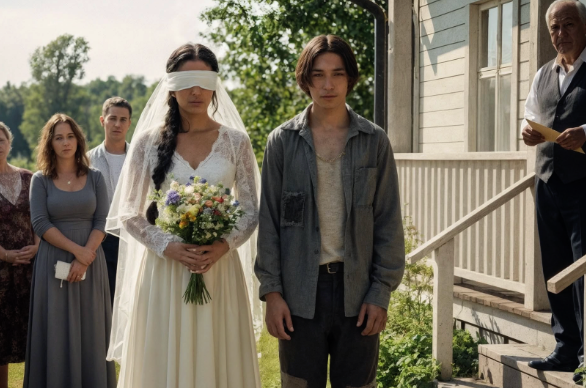
HER FATHER MARRIED HER OFF TO A BEGGAR BECAUSE SHE WAS BORN BLIND — HERE’S WHAT HAPPENED
Zainab had never seen the world, but she felt its cruelty with every breath. She was born blind into a family that valued beauty above everything else. Her two sisters were admired for their striking eyes and graceful figures, while Zainab was treated like a burden, a shameful secret to be hidden behind closed doors.
Her mother died when she was only five years old, and from that moment on, her father changed. He became bitter, resentful, and cruel, especially toward her. He never called her by her name. To him, she was only “that thing.” He did not want her at the table during family meals or outside when guests came over. He believed she was cursed. And when she turned twenty-one, he made a decision that would shatter what little remained of her already wounded heart.
One morning, he entered her small room, where she was sitting quietly, running her fingers over the worn pages of a Braille book, and dropped a folded piece of cloth onto her lap.
“You’re getting married tomorrow,” he said coldly.
She froze. The words made no sense. Married? To whom?
“It’s a beggar from the mosque,” her father continued. “You’re blind. He’s poor. A perfect match.”
She felt the blood drain from her face. She wanted to scream, but no sound came out. She had no choice. Her father had never given her one.
The next day, she was married in a rushed ceremony. She never saw his face, of course, and no one described him to her. Her father shoved her toward the man and told her to take his arm. She obeyed like a ghost trapped inside her own body. Everyone laughed behind their hands — “the blind woman and the beggar.” After the ceremony, her father handed her a small bag of clothes and pushed her toward the man.
“Now she’s your problem,” he said, walking away without looking back.
The beggar, whose name was Yusha, led her silently down the road. He did not speak for a long time. They reached a crumbling hut on the edge of the village. She could smell damp earth and smoke.
“It’s not much,” Yusha said gently. “But here, you will be safe.”
She sat down on the worn rug inside, holding back her tears. This was her life now: a blind woman married to a beggar, in a hut made of mud and hope.
But that first night, something strange happened. Yusha made her tea with gentle hands. He gave her his blanket and slept near the door like a guard dog protecting his queen. He spoke to her as though she truly mattered — he asked what stories she liked, what dreams she had, what foods made her smile. No one had ever asked her those things before.
Days turned into weeks. Every morning, Yusha walked with her to the river, describing the sun, the birds, and the trees so beautifully that she began to feel them as if she could see them through his words. He sang to her while she washed clothes, and at night he told her stories about stars and distant lands. She laughed for the first time in years. Her heart began to open. And in that strange little hut, the unexpected happened: Zainab fell in love.
One afternoon, as she held his hand, she asked:
“Have you always been a beggar?”
He hesitated. Then he answered softly:
“Not always.”
But he said nothing more, and she did not press him.
Until the day she did.
She went alone to the market to buy vegetables. Yusha had given her careful directions, and she had memorized them. But halfway there, someone grabbed her arm roughly.
“Blind rat!” a voice spat.
It was her sister. Aminah.
“Still alive? Still the wife of a beggar?”
Zainab felt tears rise, but she held her head high.
“I’m happy,” she said.
Aminah let out a harsh laugh.
“You don’t even know who he really is. What a waste. Just like you.”
Then she whispered something that shattered her:
“He’s not a beggar, Zainab. You’ve been deceived.”
Zainab stumbled home, shaken and confused. She waited until nightfall, and when Yusha returned, she asked the question again — this time firmly.
“Tell me the truth. Who are you really?”
Then he knelt before her, took her hands, and said:
“You were not supposed to find out yet. But I can’t lie to you anymore.”
Her heart pounded wildly. He took a deep breath.
“I’m not a beggar. I am the Emir’s son.”
Zainab had never seen the world, yet she felt its cruelty in every breath she took.
She was born blind into a family that valued beauty above all else. Her two sisters were admired for their captivating eyes and graceful figures, while Zainab was treated like a burden, a shameful secret to be hidden behind closed doors.
Her mother died when she was only five years old, and from that moment on, her father changed. He became bitter, resentful, and cruel, especially toward her. He never called her by her name; to him, she was nothing more than “that thing.” He did not want her at the family table or in sight when guests came. He believed she was cursed, and when Zainab turned twenty-one, he made a decision that would destroy what little remained of her already broken heart.
One morning, her father entered her small room, where Zainab was sitting in silence, her fingers moving across the raised dots of a worn Braille book. He dropped a folded piece of cloth onto her lap.
“You’re getting married tomorrow,” he said flatly.
Zainab froze. The words made no sense. Married? To whom?
“It’s a beggar from the mosque,” her father continued. “You’re blind, he’s poor. A fitting match for you.”
She felt the blood drain from her face. She wanted to scream, but no sound came out. She had no choice. Her father had never given her one.
The next day, she was married in a small, rushed ceremony. Of course, she never saw her husband’s face, and no one dared describe it to her. Her father shoved her toward the man and told her to take his arm. She obeyed, like a ghost trapped inside her own body. People laughed behind their hands, whispering, “The blind girl and the beggar.”
After the ceremony, her father handed her a small bag containing a few clothes and pushed her toward the man.
“She’s your problem now,” he said as he walked away without looking back.
The beggar, whose name was Yusha, guided her silently down the road. He said nothing for a long time. They arrived at a small, run-down hut on the edge of the village. It smelled of damp earth and smoke.
“It’s not much,” Yusha said softly. “But here, you will be safe.”
She sat down on the old mats inside, holding back her tears. So this was her life now. A blind girl married to a beggar, in a hut made of mud and hope.
But that first night, something strange happened.
Yusha made her tea with gentle, careful movements. He gave her his coat and slept near the door, like a guard dog protecting his queen. He spoke to her as if she truly mattered, asking what stories she loved, what dreams she carried inside her, what foods made her smile. No one had ever asked her such questions before.
Days turned into weeks. Every morning, Yusha walked with her to the river, describing the sun, the birds, and the trees with such poetry that Zainab felt as though she could see them through his words. He sang songs to her while washing clothes, and in the evenings he told her stories of stars and distant lands. Zainab laughed for the first time in years. Her heart began to open. And in that strange little hut, the unimaginable happened: Zainab fell in love.
One afternoon, as she reached for his hand, she asked,
“Have you always been a beggar?”
He hesitated. Then he said softly,
“Not always.”
He explained nothing more, and Zainab did not press him.
Until the day she did.
She went alone to the market to buy vegetables. Yusha had given her precise directions, and she had memorized every step. But halfway there, someone grabbed her roughly by the arm.
“Blind rat!” a voice spat.
It was her sister. Aminah.
“Still alive? Still pretending to be a beggar’s wife?”
Zainab felt tears rise to her eyes, but she stood tall.
“I’m happy,” she said.
Aminah let out a cruel laugh.
“You don’t even know what he looks like. He’s trash. Just like you.”
Then she whispered something that shattered Zainab.
“He’s not a beggar. Zainab, you’ve been lied to.”
Zainab staggered home, lost and shaken. She waited for nightfall, and when Yusha returned, she asked the question again, this time in a firm voice.
“Tell me the truth. Who are you really?”
He knelt before her, took her hands, and said,
“You were never supposed to find out this soon. But I can’t lie to you anymore.”
Her heart pounded wildly.
He took a deep breath.
“I am not a beggar. I am the Emir’s son.”
Zainab’s world trembled as she absorbed those words. “The Emir’s son.” Her mind replayed every moment they had shared—his kindness, his strength, the vividness of his stories, too rich and deep for a simple beggar—and suddenly everything made sense. He had never been a beggar. Her father had married her off not to a wretch, but to a prince dressed in rags.
She pulled her hands away, her voice trembling.
“Why? Why did you let me believe you were a beggar?”
“Because I wanted someone who would see me for who I am—not my wealth, not my title. Just me. Someone pure. A love that cannot be bought. You were everything I had prayed to find, Zainab.”
Her heart wrestled between anger and love. Why had he not told her? Why had he let her feel abandoned like unwanted trash?
“I never wanted to hurt you. I came in disguise because I was tired of women loving the throne instead of the man. Then I heard of a blind young woman rejected by her own father. I watched you from a distance for weeks before I came to him in disguise. I knew he would agree, because he wanted to get rid of you.”
Tears rolled down Zainab’s cheeks. The pain of her father’s rejection mingled with the shock of the revelation.
“Come with me now—to my world, to the palace.”
Her heart leapt.
“But I am blind. How could I ever be a princess?”
He smiled.
“You already are, my princess.”
The next morning, a royal carriage stopped in front of their hut. Guards dressed in black and gold bowed before Yusha and Zainab. She clung tightly to his arm as the carriage rolled toward the palace.
When they arrived, the crowd gasped. The missing prince had returned—with a blind young woman on his arm. The queen stared at Zainab for a long moment, her eyes sharp and searching. Zainab bowed humbly. Yusha stood tall at her side and declared,
“This is my wife—the woman I chose. The one who saw my soul when no one else could.”
The queen remained silent for a moment, then stepped forward and embraced Zainab.
“Then she is my daughter,” she said.
Zainab nearly collapsed with relief. Yusha whispered to her,
“I told you, you are safe.”
That night, standing near the palace window, Zainab listened to the sounds of the royal court. Her life had changed in a single day. She was no longer “that thing hidden away.” She was a wife, a princess, a woman loved not for her beauty, but for her soul.
And yet she knew shadows still remained—her father’s hatred, the whispers of the court. But for the first time, she felt strong.
“I will not be crowned unless my wife is accepted and honored. If she is not, I will leave with her.”
The hall fell silent.
The queen rose and proclaimed,
“From this day forward, Zainab is not only your wife—she is Princess Zainab of the Royal House. To disrespect her is to dishonor the crown.”
Respect replaced mockery. Zainab’s heart raced—not with fear, but with strength.
She began to make her voice heard at court, listening, advising, and bringing people together. Little by little, the nobles came to respect her not for her title, but for her wisdom.
Zainab was no longer the blind girl once hidden away. She had become the queen of her own destiny. And at her side, Yusha remained her unwavering support.
Together, they built a kingdom ruled not by appearances, but by love, acceptance, and true strength.
For in the end, Zainab understood that love does not depend on what the eyes can see, but on what the heart knows how to hold.