
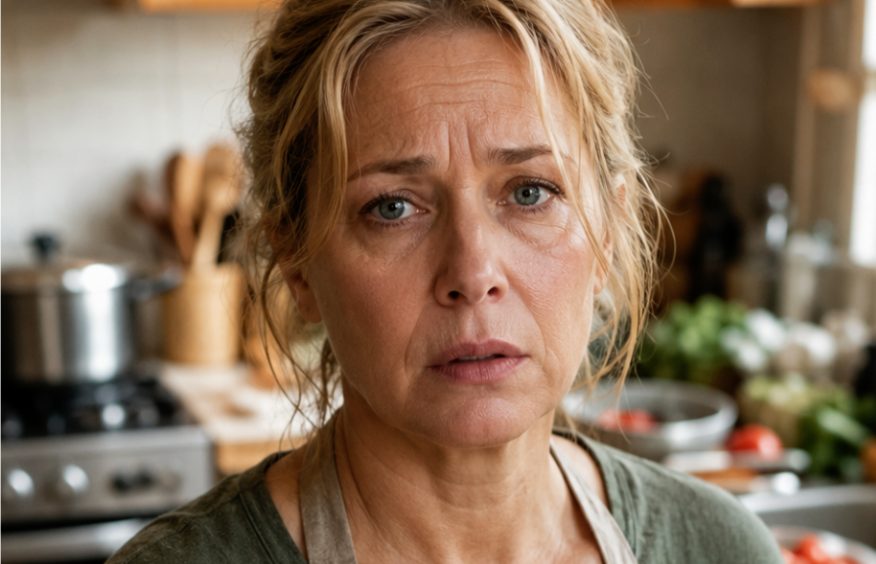
Don’t forget the goose,” Oleg said without looking up from his phone. “Mom likes it with apples.”
I was standing in the middle of the kitchen with two grocery bags. Heavy ones. In one there were potatoes, carrots, and onions. In the other, a four-kilogram goose. Oleg had called me at work during lunch and announced that we were having guests on Saturday. Twenty people. His birthday. Fifty-six years old.
There were two days left until Saturday.
I work as a cost-estimating engineer. Eight hours with numbers, then the store, then the kitchen. And it had been that way for twelve years, ever since Oleg decided that our house was perfect for feasts. A big kitchen, a long living room, a yard with a grill. And most importantly, a wife who organized everything.
“Oleg, I asked you to warn me two weeks in advance,” I said, unloading the bags. “Two days is not enough time.”
“What’s there to cook?” He shrugged. “Chop up some salads, put the main course in the oven. You like cooking.”
I do like cooking. For two people. For four, if the children come over. But not for twenty. Not every month and a half. Not alone.
Over twelve years, I counted about ninety-six feasts. Eight a year — birthdays, holidays, “the guys will just drop by.” Each one took fourteen hours of my time. Two days of cooking, an evening of serving, half a day of cleaning. And not once — not a single time — had Oleg washed even one plate.
I put the goose in the refrigerator and started peeling potatoes.
On Friday evening, I was chopping my fourth basin of Olivier salad. My hands smelled of marinade, vinegar, and onions. On the table stood three baking trays of pirozhki — with meat, with cabbage, with egg. The goose was slowly roasting in the oven. On the stove were borscht in a ten-liter pot and aspic that I had started making on Thursday.
Oleg came into the kitchen, took a pirozhok, and bit into it.
“Not enough meat ones,” he said. “Genka eats about five of them.”
“I made forty,” I replied.
“Forty for twenty people is only two each. Not much.”
Without a word, I took the minced meat out of the refrigerator.
“And buy lemonade tomorrow,” he added from the hallway. “Cola and something for the kids.”
I shaped pirozhki until one in the morning. On Saturday, I got up at six. I arranged chairs, spread tablecloths, polished glasses. Oleg woke up at ten, drank coffee, and went out for drinks. He came back with two bags — lemonade, cola, and three bottles of vodka. He put them on the table, changed into a new shirt, and sat down to watch football.
The guests arrived at four. Twenty people — and each one had to be poured for, served, cleaned up after. I carried dishes from the kitchen to the living room, removed dirty plates, refilled drinks, sliced bread, reheated food that had gone cold. I did not sit down once the entire evening. I did not even have time to drink water — only on the go, from a mug, standing by the stove.
Oleg sat at the head of the table, telling stories and laughing. His mother ate the goose with apples and nodded — good, apparently. One of the guests, Natalya, Genka’s wife, stopped me when I was passing by yet again with a stack of plates.
“Avgusta, sit down. At least eat something.”
“In a moment,” I replied. “I’ll serve the hot dish and sit down.”
I did not sit down. After the hot dish came dessert. After dessert, tea. After tea, “Could we have more pirozhki?”
At eleven in the evening, the last guests left. On the table was a mountain of dishes. I counted: sixty plates, thirty glasses, salad bowls, baking trays, forks, knives. The tablecloth was stained with beetroot and wine. On the floor under the table were crumbs, a cucumber end, and a napkin soaked with sauce.
I washed dishes until half past one in the morning. Oleg went to bed at twelve. Before going to sleep, he glanced into the kitchen, looked at the sink full of pots, and said, “Leave it. You’ll finish it tomorrow.” Then he left.
I did not leave it. I washed everything. Because I knew that if I left it, tomorrow would be worse. The grease would dry, the borscht would harden on the sides of the pot, and washing it would take twice as long.
In the morning, Oleg sat at the clean table, drinking coffee and scrolling through his phone.
“We had a good time,” he said. “Everyone was pleased.”
I said nothing. My hands throbbed. My back ached. I had worked fourteen hours straight — and not one “thank you.”
But I kept silent. As always.
Three months later, Oleg decided to throw a barbecue. Fifteen people — colleagues from work. “We’ll just grill some meat, nothing complicated.”
Nothing complicated meant: I spent two days marinating pork and chicken, making three salads, baking flatbreads, boiling potatoes, preparing vegetable platters, buying disposable dishes — which still were not enough, so I had to wash regular plates — setting tables in the yard, and dragging chairs from the house.
Oleg grilled the meat.
One of his colleagues, Gennady, a large man with a mustache, tasted the shashlik, wiped his lips with a napkin, and said:
“Oleg, you have golden hands. The meat is fantastic.”
“I try,” Oleg said, turning the skewers and smiling.
No one asked who had marinated that meat. No one noticed the three basins of salads. Gennady took a fourth serving of potatoes with dill and turned to Oleg.
“Listen, can we do it at your place next time too? My yard is small.”
“Of course!” Oleg clapped him on the shoulder. “Right, Avgusta?”
I was standing with a tray of dirty plates. My hands were covered in oil. My apron was stained. Fifteen people were looking at me.
“I cooked for two days,” I said. “Fourteen hours. Marinade, salads, flatbreads, potatoes, sliced vegetables. How many times did anyone thank me? Zero.”
Gennady froze with his fork near his mouth. Oleg turned pale.
“Oh, come on,” he tried to laugh. “The guys are guests. Don’t do this.”
“I’m not ‘doing this,’” I replied. “I’m counting.”
In the car on the way back from the store — we had stopped for extra bread, because once again there had not been enough bread — Oleg was silent. Then he said:
“You embarrassed me in front of my colleagues.”
“And you’ve been presenting me as a servant in front of them for twelve years,” I replied. “Only no one counts that.”
He did not answer. He turned on the radio. We drove home in silence.
That evening, Larisa called — his sister. She always called after our “events.” Not me — Oleg. But I could hear from the kitchen.
“She’s got a temper,” Larisa said. “But you’re the husband, Oleg. This is your house. Put things in order.”
Order. Order meant: Avgusta keeps quiet and serves everyone.
I finished washing the baking tray, hung the apron on its hook, and went to bed.
In September, Larisa decided to celebrate her anniversary. Fifty-two years old. Oleg, without asking me a single question, offered our house. Twenty-five guests.
I found out about it on Monday. The anniversary was on Saturday. Five days.
“Oleg,” I said. “You didn’t ask me again.”
“Well, where else can she do it?” He was sitting on the sofa, scrolling through the news on his phone. “Her apartment is small. And we have the living room.”
“We have the living room. But I’ll be the one cooking.”
“She’ll help.”
Larisa did not help. Larisa arrived on Saturday morning in a new dress, with her hair done. She sat down at the table and began giving orders.
“Avgusta, put the roses in a vase, but the tall one. Avgusta, the white tablecloth would be better. Avgusta, chop the salad smaller — one of my friends has bad teeth.”
I kept silent and chopped the salad smaller.
By three o’clock, the table was set. Twenty-five people sat down. Oleg opened the wine. Larisa accepted congratulations. I stood by the stove, serving the hot dish onto plates.
After the second toast, Larisa tasted the herring under a fur coat and said loudly, for the entire table to hear:
“Avgusta, you oversalted it. The beets, I think. Or maybe you didn’t soak the herring.”
Twenty-five people fell silent. Someone lowered their eyes to their plate. I felt my ears burn.
“Cook it yourself,” I said. “The kitchen is free.”
Larisa flinched.
“I was joking,” she said. “Why are you reacting like that?”
“I’m not reacting right away,” I replied. “I spent three days cooking for twenty-five people. For free. For your anniversary. In my house.”
Silence hung in the room. Oleg put the corkscrew down on the table.
“Avgusta,” he said quietly. “Let’s discuss this later.”
“Later — when?” I asked. “After the next thirty plates?”
I went to the kitchen. My hands were shaking. Not from fear — from anger. Twelve years. A hundred feasts. And not once — not a single “thank you” from Larisa. Only remarks: too little salt, too much salt, the wrong tablecloth, the forks placed incorrectly.
That evening, after the guests had left, Oleg came into the kitchen.
“You disgraced me in front of my sister,” he said.
I was washing glasses. Twenty-six of them — Larisa had broken one and had not even apologized.
“And you disgraced me in front of twenty-five people,” I replied. “When you stayed silent.”
He went to the bedroom. He shut the door firmly, with pressure.
I washed the dishes alone. As always.
That evening, I counted: eighty-five plates, twenty-five glasses, three baking trays, five pots, salad bowls, sauce dishes, cutlery. Two hours and twenty minutes of pure work at the sink. I finished at one in the morning, turned off the light, and sat down on a stool right there in the kitchen. My back burned. My fingers were swollen from the hot water.
A week later, Oleg announced that there would be thirty guests at our house for New Year’s.
Thirty. I was not even surprised. I simply wrote the number on a piece of paper and hung it on the refrigerator.
I cooked for three days. I started on the twenty-ninth. Aspic, jellied dishes, three kinds of salads, fish pie, roast duck, country-style potatoes, sliced meats and cheeses, canapés, two cakes. Oleg bought a Christmas tree, put it in the living room, and hung a garland on it. That was his contribution.
On December thirty-first, at four in the afternoon, I put on my apron. The same one — blue, with a pocket where I always kept a towel. Twelve years in that apron. It had faded, worn thin in places, and one strap had been sewn back on twice.
The guests began arriving at seven. By nine, the living room was full — thirty people. Cousins, colleagues, neighbors, Larisa with her husband. Oleg stood by the door, shaking hands, hugging people, slapping backs. I carried dishes from the kitchen to the living room. Back and forth. Back and forth.
At half past ten, I put the fourth serving of sliced appetizers on the table — the guests had eaten the first three — and returned to the kitchen for the hot dish. The duck was finishing in the oven. The potatoes were cooling in the pot and needed to be reheated. I put a frying pan on the stove.
Oleg peered into the kitchen. His tie was crooked, his cheeks were red, and he had a glass in his hand.
“Where’s the hot dish?” he asked. “The guests are waiting. Genka has already asked three times.”
I stood by the stove. My apron was stained. My hands smelled of onions, garlic, and fish. Behind the wall, thirty people he had invited were laughing. Thirty people I was feeding.
“It’ll be ready soon,” I said.
“Well, hurry it up,” he said, taking a sip from his glass. “It’s a holiday.”
A holiday. I had been cooking for three days. I had gotten up at six in the morning on December thirty-first. I had not put on makeup, had not done my hair. I had not had time. I had not even changed clothes — under the apron was the same sweater I had worn while cleaning fish.
Oleg returned to the living room. I heard his voice: “Any minute now, the hot dish is on its way!” And laughter.
I looked at my hands. Red. Rough. With a burn from the baking tray on my left wrist — from yesterday, when I had taken out the pie. Twelve years. Ninety-six feasts. Fourteen hours for each. One thousand three hundred forty-four hours. Fifty-six full days of my life I had spent in this kitchen for his guests.
And not a single plate washed by him.
My fingers clenched. I felt something shift inside me — not snap, but shift, like a bolt finally sliding open.
I turned off the stove. Took off the apron. Folded it neatly and placed it on the table beside a half-sliced lemon.
Then I went into the living room.
Thirty people were sitting at the long table. Oleg was at the head. Larisa sat to his right in a red dress, holding a glass of champagne. Genka was chewing a pirozhok. Someone’s wife was adjusting tinsel on the Christmas tree.
“Oleg,” I said.
He turned around. He was still smiling.
“You invited them — you serve them.”
Silence. Thirty pairs of eyes. Genka stopped chewing.
“The hot dish is on the stove,” I continued. “The duck is in the oven, the potatoes are in the pot. The plates are in the upper cabinet. The dish sponge is under the sink. Though you probably don’t know where it is. In twelve years, you’ve never looked for it.”
“Avgusta,” Oleg stood up. “What are you doing? In front of people?”
“You’re not embarrassed in front of people,” I replied. “Not when I carry plates. Not when I’ve been in an apron since six in the morning. Not when Larisa criticizes my food in my house.”
Larisa opened her mouth. Closed it. Opened it again.
“Avgusta, well, you’re—”
“I’m what?” I turned to her. “A wife? Yes. A wife, not a cook for thirty people. Not a dishwasher. Not a waitress.”
I looked around the table. Dirty plates, crumpled napkins, wine stains on the tablecloth I had ironed three hours earlier.
“Happy New Year,” I said.
And I left. I went upstairs to the bedroom, closed the door, and lay down on the bed in the sweater that smelled of fish. Downstairs, it was quiet. Then dishes began to clatter — someone was moving plates. Then water started running in the kitchen.
I lay there and listened. My heart was beating steadily. My hands were no longer shaking.
Half an hour later, Oleg came upstairs. He opened the door and stood on the threshold.
“I washed the plates,” he said. “Four of them.”
Four. Out of one hundred twenty.
“The other one hundred sixteen are waiting,” I replied without turning around.
He stood there a little longer. Then he went downstairs. The water started running again.
That night, for the first time in his life, Oleg washed a plate. Then a second. Then a third. The guests helped — someone stacked dishes, someone wiped the table. Genka took out the trash. Larisa, they say, sat in the living room and kept silent.
I lay upstairs and stared at the ceiling. The New Year began without me. The chimes struck — I could hear the television downstairs. No one came to call me.
I fell asleep at half past twelve. Peacefully. For the first time in twelve New Year’s nights — without wet hands and an aching back.
A month has passed. Oleg no longer invites guests. Not a single call, not a single “the guys will drop by.” He is silent. Offended, heavily silent. At dinner, he looks down at his plate. His own plate — which he now sometimes washes himself. Not every time, but it happens.
Larisa calls once a week. Not me — him. I hear fragments: “she humiliated you,” “in front of people,” “normal wives don’t do that.” Oleg listens, nods, then hangs up and goes silent again.
When Genka saw me in the yard, he looked away. Then he finally said, “You went too far. But I understand you.”
I sleep peacefully. My hands have healed, the burn on my wrist is gone. The apron hangs on its hook — clean and ironed. I have not put it on once this month.
Did I go too far back then, in front of thirty guests? Or was twelve years of silence what was truly too much?