
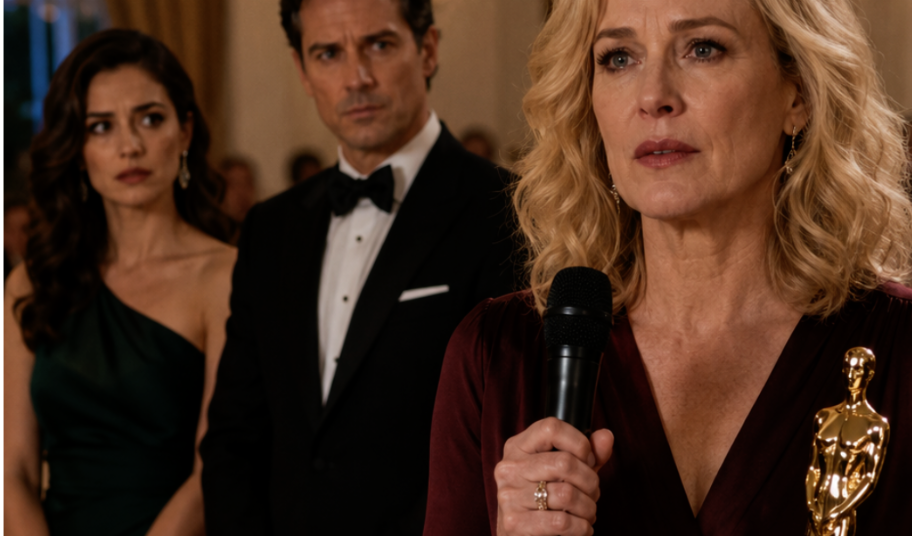
My ex-husband came to the alumni reunion with his new wife. He didn’t know I had organized the evening and would be presenting the awards
“Faina, are you sure you want to do this?” Nina stood in the doorway of my office with a folder in her hands, looking at me as if I were about to jump off a cliff.
I put my phone into my bag and reached for the guest list.
“I do. The evening is in four months. I’ve already booked the banquet hall and paid the deposit—forty thousand. What am I supposed to do now, cancel?”
“I’m not talking about the evening,” Nina said, lowering herself onto a chair and opening the folder. “I’m talking about him. He registered yesterday.”
Nina and I had been friends since first grade—thirty-four years after graduation, and she was still the only person I could call at two in the morning. She had stayed at the school and taught history. I had gone into the travel business, opened an agency, and expanded it to two offices. But every Saturday, we still drank tea in my kitchen, just like we had at twenty.
I had started organizing the alumni reunion myself. Our class hadn’t gathered in years—not since the school anniversary, back when Rostislav had still been sitting beside me and holding my hand. Many years had passed since then, and everything had changed. I was now the director of a travel agency with eight employees. He was my ex-husband. Between us lay seven years of silence.
I ran my eyes over the list. Twenty-eight names. And one of them was Rostislav Karnaukhov.
Confirmed.
My fingers gripped the edge of the paper harder than necessary.
“When did he sign up?”
“The day before yesterday. Through the form on the website. I only saw it this morning.”
I placed the sheet on the desk and smoothed down the bent corner. Four months of preparation were already behind me—the hall rental, negotiations with the restaurant, the menu, the program, the invitations. All of it had been my idea, my money, my time. Every evening after work, I sat over the script, sorted through photos from our school albums, and came up with contests.
And then he registered.
He simply clicked a button on a form. As if this were someone else’s party, somewhere he could casually drop by.
Maybe, to him, that was exactly what it was.
“We’re not changing anything,” I said. “We continue as planned.”
Nina nodded. But in her eyes, I read the question she didn’t say out loud.
Rostislav and I got married four years after school. I was twenty-two, he was twenty-three. We celebrated the wedding in a café on the outskirts of town; there were about thirty guests, and my mother baked the cake with her own hands. It seemed like forever.
For twenty-three years, I lived with a man who measured my every step with his own ruler. And that ruler always showed the same thing: I was not good enough.
When I got a job as a manager at a travel agency, he smirked over dinner.
“Selling vacation packages? Well, that’s a career, I suppose.”
“I like it,” I replied. “There are interesting people, trips, negotiations.”
“Negotiations,” he repeated the word as if I had said “sandbox.” “Well, go on then. Sell your vacation packages.”
Three years later, I was promoted to senior manager. I came home, put a bottle of wine on the table, and said:
“I got promoted. Now I have my own department.”
He shrugged without looking away from the television.
“So now you shuffle papers in a separate office. Congratulations.”
We never opened the wine. The bottle stood on the kitchen shelf for another two years, until I poured it down the sink.
And when I decided to leave employment and open my own agency, Rostislav looked at me over his newspaper and said in the tone I had learned to recognize over the years—the tone of a sentence being passed:
“You’ll go bankrupt in six months. You’ll come crawling back. And you’ll ask me for help.”
I didn’t go bankrupt.
But every evening after work—and my workday ended at eight, sometimes nine—I heard the same thing.
“Did you make dinner? Or were you sitting around in that little office of yours again?”
“I closed a deal for two hundred thousand today,” I said once. My legs were aching from exhaustion, but there was warmth inside me—the deal had been big, the client difficult, and I had handled it.
“I didn’t ask you about the deal. Is there food, or am I supposed to think about that myself too?”
And I went to the kitchen.
Every time.
Twenty-three years is around eight thousand dinners.
I didn’t count them back then. I simply opened a calculator one day after the divorce. And closed it a minute later, because the number was so heavy it became hard to breathe.
At corporate events and celebrations, Rostislav behaved differently. In public, he hugged me, called me “my clever girl,” and told people how he “supported his wife in business.” His support consisted of not getting in the way—and even that wasn’t always true.
Once, at my birthday party, in front of the guests, he raised a toast:
“To my Faina. Who would never have built anything without me. Because someone had to inspire her—even if only with anger!”
And he laughed.
The guests laughed too.
And I smiled, because crying in public was not my way.
Then came the divorce. The year was 2019. Rostislav turned forty-six and decided he deserved “a new life.” He announced it over breakfast on a Sunday morning, between eggs and coffee.
“I’m leaving. I want to start over.”
No explanations. No attempt to talk, to listen, to discuss anything.
Just: I want to start over.
As if our twenty-three years together were a draft that could be crumpled up and thrown away.
He left me the apartment. But not out of generosity—it still had a mortgage on it. Three hundred thousand rubles. For himself, he took the dacha, the car, and the living room furniture, including the sofa on which our son had taken his first steps.
When I said the division was unfair, he looked down at me with the gaze I had seen thousands of times and said:
“Without me, you’re nobody. You’ll come running back within a year.”
I remembered every word. Every pause between them. Every second of silence afterward.
I did not come running back.
I paid off the mortgage in three years—ten thousand above the schedule every month, canceled vacations two years in a row, saved on everything. I expanded the agency.
Meanwhile, Rostislav married Arina. She was thirty-two—twenty years younger than me.
Bits and pieces reached me through mutual acquaintances: he bragged about his young wife, his new car, trips abroad. I stayed silent. I didn’t look at his social media. I didn’t enter into conversations.
And now—the alumni evening.
My evening.
Nina called a week before the event. Her voice was cautious, like a nurse before giving an injection.
“Faina. He registered a plus-one. Arina.”
I stood in the kitchen with a mug of cold tea in my hands. Outside the window, dusk was turning blue.
“All right,” I said. “Put out an extra chair.”
I decorated the hall of the Birch Grove restaurant for two days. Garlands made of school photographs—old pictures, scanned and printed on thick paper—were strung on twine between the columns. On every table were name cards that I had written by hand over two evenings. I coordinated the menu personally with the chef: Lena was allergic to nuts, Sasha to fish. Sixty-three thousand rubles out of my own pocket. I didn’t want everyone to chip in—the idea was mine, so the expenses were mine too.
The guests began arriving at seven. I stood at the entrance in a dark blue dress I had chosen especially for the evening. I hugged everyone, laughed, showed them photographs.
“And here we are at the potato harvest, remember?”
The joy was real. I had missed these people, the ones with whom I had spent ten school years.
At quarter to eight, Rostislav appeared in the doorway.
His shoulders had broadened. His tan was even, orange-tinted, from a tanning bed. His shirt was unbuttoned one button more than appropriate. On the little finger of his right hand was a gold signet ring with engraving, one he had never worn before.
Beside him stood Arina. Sharp cheekbones, red lipstick, a dress with bare shoulders, although it was April outside and the daytime temperature had barely reached twelve degrees.
His eyes did not find me at once. First, he looked around the hall, noticed the garlands, and nodded with the air of an owner. Only then did he see me.
One second.
His smile faltered.
But he knew how to keep his face—I had learned that over twenty-three years.
He whispered something to Arina and stepped toward me.
“Oh, Faina!” His voice was polished and loud enough for the whole hall. “What a surprise. You’re here.”
“I’m the organizer. Good evening, Rostislav.”
He blinked—quickly, as if at a bright light.
“The organizer? You?” Then he immediately turned. “Arisha, meet Faina. We went to school together.”
We went to school together.
Arina extended her hand. A cold palm, thin fingers, a ring with a stone…
Continued below in the first comment.
Faina, are you sure you want to do this?” Nina stood in the doorway of my office with a folder in her hands, looking at me as if I were about to jump off a cliff.
I put my phone into my bag and reached for the guest list.
“I do. The evening is in four months. I’ve already booked the banquet hall, paid the deposit — forty thousand. What am I supposed to do now, cancel?”
“I’m not talking about the evening,” Nina said, lowering herself into a chair and opening the folder. “I’m talking about him. He registered yesterday.”
Nina and I had been friends since first grade — thirty-four years after graduation, and she was still the only person I could call at two in the morning. She stayed at the school and taught history. I went into the travel business, opened an agency, and expanded it to two offices. But every Saturday we still drank tea in my kitchen, just like when we were twenty.
I was the one who had started organizing the class reunion. Our class hadn’t gathered in a long time — not since the school anniversary, when Rostislav was still sitting beside me and holding my hand. Many years had passed since then, and everything had changed. I was the director of a travel agency with eight employees. He was my ex-husband. Between us lay seven years of silence.
I ran my eyes over the list. Twenty-eight names. And one of them was Karnaukhov Rostislav. Confirmed.
My fingers squeezed the edge of the paper harder than necessary.
“When did he sign up?”
“The day before yesterday. Through the form on the website. I only saw it this morning.”
I placed the sheet on the desk and smoothed the bent corner. Four months of preparation were already behind me — renting the hall, negotiating with the restaurant, planning the menu, the program, the invitations. All of it had been my idea, my money, my time. Every evening after work I sat over the script, chose photos from school albums, came up with contests. And now he had signed up. Just clicked a button on a form. As if this were someone else’s party he could casually drop by.
Maybe, for him, that was exactly what it was.
“We’re not changing anything,” I said. “We continue as planned.”
Nina nodded. But in her eyes, I read the question she did not say aloud.
Rostislav and I got married four years after school. I was twenty-two, he was twenty-three. We had the wedding in a café on the edge of town, about thirty guests came, and my mother baked the cake herself. It seemed like forever.
For twenty-three years, I lived with a man who measured every step I took with his own ruler. And that ruler always showed that I was not good enough.
When I got a job as a manager at a travel company, he smirked over dinner.
“Selling vacation packages? Well, that’s certainly a career.”
“I like it,” I answered. “There are interesting people, trips, negotiations.”
“Negotiations,” he repeated the word as if I had said “sandbox.” “Fine then, go sell your vacation packages.”
Three years later, I was promoted to senior manager. I came home, put a bottle of wine on the table, and said:
“I got promoted. Now I have my own department.”
He shrugged without looking away from the television.
“You’re shuffling papers, only now in a separate office. Congratulations.”
We never opened the wine. The bottle stood on the kitchen shelf for another two years, until I poured it down the sink.
And when I decided to leave employment and open my own agency, Rostislav looked at me over the newspaper and said in the voice I had learned to recognize over the years — the voice of a sentence being passed:
“You’ll go bankrupt in six months. You’ll come crawling back. And you’ll come asking me.”
I did not go bankrupt. But every evening after work — and my workday ended at eight, sometimes even at nine — I heard the same thing.
“Did you make dinner? Or were you stuck in that little office of yours again?”
“I closed a deal worth two hundred thousand today,” I said once. My legs were buzzing from exhaustion, but inside I felt warm — the deal was big, the client was difficult, and I had managed it.
“I didn’t ask you about the deal. Is there food, or do I have to think about that myself?”
And I went to the kitchen. Every time. Twenty-three years — that is around eight thousand dinners.
I did not count them back then. Only one day, after the divorce, I opened a calculator. And closed it a minute later, because the number felt so crushing that it became hard to breathe.
At corporate parties and holidays, Rostislav behaved differently. In public, he hugged me, called me “my clever girl,” and told everyone how he “supported his wife in business.” His support consisted of not getting in the way — and even that was not always true. Once, on my birthday, in front of the guests, he raised a toast: “To my Faina. Who would never have built anything without me. Because someone had to inspire her — even if only with anger!” And he laughed. The guests laughed too. And I smiled, because crying in front of people was not my style.
And then came the divorce. The year 2019. Rostislav turned forty-six and decided he deserved a “new life.” He announced it at breakfast, on a Sunday morning, between eggs and coffee:
“I’m leaving. I want to start over.”
No explanations. No attempt to talk, listen, or discuss anything. Just — I want to start over. As if our twenty-three years were a rough draft that could be crumpled up and thrown away.
He left the apartment to me. But not out of generosity — it still had a mortgage on it. Three hundred thousand rubles. For himself, he took the dacha, the car, and the living room furniture, including the sofa where our son had taken his first steps.
When I said the division was unfair, he looked down at me — with that look I had seen thousands of times — and said:
“Without me, you’re nobody. You’ll come running back within a year.”
I remembered every word. Every pause between them. Every second of silence afterward.
I did not come running. I paid off the mortgage in three years — ten thousand above the schedule every month, canceled my vacation two years in a row, saved on everything. I expanded the agency. Meanwhile, Rostislav married Arina. She was thirty-two — twenty years younger than me.
Through mutual acquaintances, I heard fragments: he was boasting about his young wife, his new car, trips abroad. I stayed silent. I did not go into social media or conversations.
And now — the class reunion. My evening.
Nina called a week before the event. Her voice was cautious, like a nurse before an injection.
“Faina. He added a plus-one. Arina.”
I stood in the kitchen with a mug of cold tea. Twilight was turning blue outside the window.
“Fine,” I said. “Put out an extra chair.”
I decorated the hall of the restaurant “Birch Grove” for two days. Garlands of school photos — old pictures, scanned and printed on thick paper, stretched on twine between the columns. On every table were name cards, which I had written by hand for two evenings in a row. I personally coordinated the menu with the chef: Lena was allergic to nuts, Sasha to fish. Sixty-three thousand rubles from my own pocket. I did not want to collect money — it was my idea, so the expenses were mine too.
The guests began arriving at seven. I stood at the entrance in a dark blue dress I had chosen especially for that evening. I hugged each person, laughed, showed photos: “And here we are at potato-picking, remember?” The joy was real — I had missed these people, the ones with whom I had spent ten school years.
At quarter to eight, Rostislav appeared in the doorway.
He had broadened in the shoulders. His tan was even, orange-tinted, from a tanning salon. His shirt was unbuttoned one button lower than appropriate. On the little finger of his right hand was a ring — gold, engraved, one he had not had before. Beside him was Arina. Sharp cheekbones, red lipstick, a dress with bare shoulders, even though it was April outside and the daytime temperature had been about twelve degrees.
His gaze did not find me immediately. First, he looked around the hall, noticed the garlands, nodded with the air of an owner. Only then did he see me.
One second.
His smile twitched. But he knew how to keep his face — I had learned that over twenty-three years.
He whispered something to Arina. Then he stepped toward me.
“Oh, Faina!” His voice was staged, loud enough for the whole hall. “What a surprise. You’re here.”
“I’m the organizer. Good evening, Rostislav.”
He blinked — quickly, as if from bright light.
“Organizer? You?” And immediately he turned. “Arisha, meet Faina. We went to school together.”
Went to school together.
Arina held out her hand. A cold palm, thin fingers, a ring with a stone.
“Nice to meet you,” she said.
“Your seats are in the third row. The cards are on the table,” I said, pointing deeper into the hall.
Rostislav went toward the table, greeting people on the way.
“Seryoga! Brother! Remember P.E. class?”
Nina came up behind me. She touched my shoulder.
“Holding up?”
“Yes.”
My knuckles had turned white around the microphone handle.
The program went smoothly. Contests, a slideshow, school stories. After each segment, someone shouted, “Faina, well done!” and those words made me feel warmer.
And Rostislav sat at the third table drinking cognac. After the second glass, he started talking louder. After the third, he began interrupting.
“Remember how Faina smashed that test tube in chemistry?” he shouted across the hall, cutting through my story about our teacher.
Someone giggled. Rostislav leaned back in his chair and placed his hand on the back of Arina’s seat.
Fifteen minutes later — again. I was announcing the quiz when he stood up.
“Let me host it! I was the class monitor!”
“You were not the class monitor,” I answered into the microphone. “Vera Lapina was the class monitor. Vera, hello, it’s a shame you couldn’t come. We remember you.”
The hall laughed. Rostislav sat back down. His ring flashed as he reached for his glass.
Half an hour later, he stood up again. He put his arm around Arina’s waist and announced to the whole hall:
“Well, men, be jealous! Here she is — my youth!”
Several people smiled stiffly. Zhenya Sokolova at the first table looked at me. She knew everything. Half the hall knew.
And then Rostislav added — the fourth glass, his tongue already loosened:
“Well, what can you say? Old wives are like old cars. They may still look all right, but in essence, they’re ready to be written off!”
He laughed alone. Beside him, Arina lowered her eyes.
The hall fell silent. Oleg at the neighboring table coughed into his fist. Seryozha turned away. Lena clutched her napkin.
It seemed to me that the floor swayed. Not because of his words. Because of the silence. Everyone was looking at me. Everyone understood who he was talking about.
I stood on the stage. The microphone was in my right hand. In my left was the last framed certificate.
I had prepared twelve joke awards over two months. “Most Unrecognizable,” “Most Loyal to the School,” “Most Well-Traveled,” “Mother of the Most Children.” Kind, light, funny.
I had handed out eleven. The hall had applauded, hugged, taken pictures. One certificate remained.
Rostislav sat sprawled in his chair. Arina was touching up her lipstick while looking into a little mirror.
“And the final award,” I said. My voice sounded steady. Four months of preparation had led to this minute. “This one I prepared especially. Because I know this person better than anyone else in this hall.”
Rostislav straightened. On his face was a smile of anticipation. He was already waiting for a compliment.
“Twenty-three years,” I continued. “That is how long I lived beside him. I cooked around eight thousand dinners. I paid off a mortgage of three hundred thousand — alone, without a single kopeck of help. And when this person left, he said four words: ‘Without me, you’re nobody.’”
Absolute silence. The DJ turned off the background music — apparently, he was listening too.
Rostislav stopped smiling. Arina lowered the mirror.
“The certificate for ‘Most Loyal — to Himself’ goes to Rostislav Karnaukhov,” I said, raising the frame. “For twenty-three years of devoted service to his own comfort. For his talent for leaving when things became difficult. And for the courage to bring his new wife to an evening prepared for four months by that very ‘nobody.’”
I held the certificate out toward him.
The hall did not breathe. At the far table, someone covered their mouth with a hand. Behind me, Nina stood motionless.
Rostislav rose. The chair scraped sharply backward. His face darkened, his cheekbones sharpened, the muscles in his jaw moved under the skin.
“What are you doing?” he said quietly, but distinctly.
“The truth. For the first time in seven years.”
“This is a class reunion, not your stage for scandals!”
“Correct. A class reunion. And our classmates have just learned who Rostislav Karnaukhov is. You were not a ‘class monitor.’ You were a husband who spent twenty-three years telling his wife, ‘You’ll achieve nothing’ — and left when she achieved it.”
Arina stood, grabbing her purse.
“Let’s go,” she whispered, pulling him by the sleeve.
Rostislav jerked his arm away. He looked at me from above, as he was used to doing. But I was standing on the stage, and he was below.
“You’ll regret this,” he threw out.
“Maybe. But definitely not today.”
They left. The door shut with a dull thud.
Several seconds of silence. Then Zhenya at the first table began to clap. Two others joined her, then three. Oleg at the second table shook his head and turned toward the window. Someone in the back row said quietly, “She shouldn’t have done that in front of everyone.”
Nina took the microphone and announced a dance break.
I went into the storage room. It smelled of bleach and cleaning detergent. Boxes of napkins stood along the wall. I sat down on the end one and leaned my back against the cold tile. My hands were trembling in small shivers. My pulse beat in my temples, in my throat, in my wrists.
I had said it. In front of thirty people I had known since childhood. Numbers, his surname, direct words. Not as a hint — to his face.
And I could not tell what I felt inside: relief or fear.
I returned fifteen minutes later. Music was playing, couples were circling, someone was looking at the photographs. As if nothing had happened — but everyone knew it had.
Zhenya came up with a glass.
“Faina, you’re a woman of iron. I would never have dared.”
Oleg passed by and threw over his shoulder:
“That was ugly. This wasn’t the place for that.”
I nodded and said nothing.
Nina found me by the window closer to midnight. Outside the glass, rain was drizzling, and the streetlamp in the parking lot blinked yellow.
“I judged by their faces,” she said. “About half and half. Some think you did the right thing. Others think you shouldn’t have aired dirty laundry in public.”
“And you?”
“I think he came for attention. And he got it. Just not the kind he was counting on. But I can understand those who disagree too.”
The evening ended a little after midnight. I stayed in the hall alone. The waiters were clearing plates. The microphone lay on the stage. Beside it was the framed certificate. Rostislav had not taken it.
I picked up the frame. A school photograph: he was seventeen, shaggy-haired, in a stretched-out sweater, smiling with his whole mouth. A handsome boy. It was impossible to understand when that boy had grown into a man who could tell his wife, “Without me, you’re nobody.”
I put the frame into a bag. Turned off the stage lights. Went out to the parking lot.
The rain had stopped. The asphalt shone under the streetlights. It smelled of wet earth and lilacs from the flowerbed near the entrance.
I got into the car I had bought myself, started the engine, and drove home — to the apartment I had paid off myself, down to the last kopeck.
A month passed. Rostislav left the class group chat. Through acquaintances, he passed along that I had “put on a circus” and “disgraced myself.” Arina sent me one word in a messenger: “Shameful.” I did not reply.
The classmates split. Zhenya, Lena, and Katya wrote: “You did the right thing, it was long overdue.” Oleg, Seryozha, and Misha stayed silent. Or said behind my back that a class reunion was not the place to settle personal scores.
And I sit in the kitchen in the evening. The tea cools in my mug; outside the window, May is warm. Sixty-three thousand spent. Four months of work. He came to my evening with his young wife, not knowing that I was the organizer. He boasted, interrupted, joked about “old wives.” And he received an answer. In front of everyone.
Did I go too far then? Or did he bring it on himself — when he came to show off at an evening that had been prepared for four months by that very “nobody”?