Maria spent three days scrubbing every corner of the house, as if her enemy weren’t dust but time itself—the time that had separated her from her son. She woke before dawn, though the bus wasn’t due to arrive in the village until after noon. She couldn’t sleep anyway. Andrey was coming home after five years spent in Germany—five years during which she’d seen him only in a few photographs and video calls that kept dropping because of the poor internet.
In the kitchen, dough for Easter cakes rose beneath a clean towel. The night before, she had prepared the filling for cabbage rolls and wrapped them one by one deep into the night. The rolls simmered for hours over low heat, filling the house with the scent of Andrey’s childhood. She also baked cheese pastries—his favorites since he was little.
Maria looked at herself in the bedroom mirror. She carefully did her hair and tied on a new headscarf she’d bought especially at the fair. She studied the crow’s-feet at her eyes. Fifty-eight years had left their mark—the labor in the fields, the running of the household, and the ache for her only son.
“Will he recognize me?” she wondered, then laughed at the foolish thought. She was his mother. But him—had Germany changed him? Did he still speak Russian the same way? Would he be ashamed of the old house, of the village’s dusty lanes?
All day the neighbor women walked past the gate, pretending they had errands, when really they wanted to peek at the preparations. “Maria’s Andrey is coming back,” they whispered. “Made something of himself with the Germans.”
Only those who have raised children and seen them off on a long road know how each day of waiting stretches into a little eternity.
By noon she began setting the table in the front room—the very one used only on holidays. An embroidered tablecloth, polished cutlery, the best plates from the china cabinet that had sat closed and gathering dust for years. In the center of the table, in a crystal vase, she placed fresh flowers from the garden.
When she finished, she went out into the yard and sat on the bench beneath the apple tree. From there she could see the main road; from there she would hear the bus stop in the village center. There were still a few hours to go, but she was ready to wait. Her heart pounded like that of a young girl before her first date.
How many parents are waiting like this in Russia’s villages? How many mothers count the days between the rare visits of children who have left? No sacrifice seemed too great if only her son might live better—but the price of loneliness could be crushing.
Toward four o’clock she heard the bus horn in the distance. She stood up, straightened her dress, ran a hand over her hair. For a moment she froze, as if drawing strength from the earth beneath her feet, then walked to the gate.
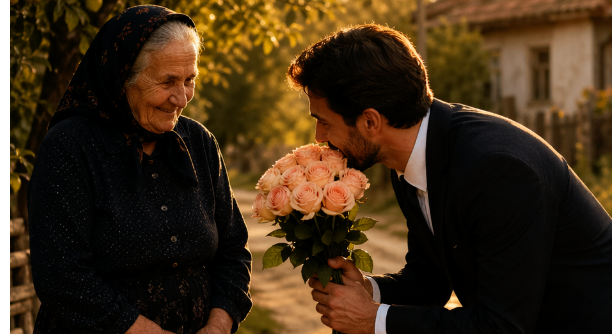
The bus pulled into the center, kicking up a cloud of dust. A few people got off—an old woman with bags, two teenagers, a middle-aged man. And last—a tall young man in a dark blue suit, a suitcase in one hand and a bouquet of flowers in the other.
Maria stopped short. It was him, and yet somehow not him. Taller than she remembered, leaner, with closely cropped hair and a posture that made him look like a stranger against the village backdrop. For a moment a wave of doubt washed over her.
But then the young man lifted his gaze. His eyes lit up, and a smile transformed his face. He set the suitcase on the ground and ran toward her.
“Mom!” he shouted from afar.
And suddenly the elegant suit no longer mattered. This was her boy running home from school, the teenager who used to help her…
Continued in the comments.
Three days Maria scrubbed every corner of the house, as if her enemy weren’t dust but time itself—the time that had separated her from her son. She woke before dawn, even though the bus wouldn’t arrive in the village until after lunch. She still couldn’t sleep. Andrei was coming home after five years in Germany. Five years during which she’d seen him only in a few photographs and in video calls that kept cutting out because of bad internet.
In the kitchen, dough for Easter cakes was rising under a clean towel. The night before she had prepared the filling for cabbage rolls and wrapped them one by one deep into the night. They had been simmering for hours over low heat, filling the house with the aroma of Andrei’s childhood. She had also baked cottage-cheese pastries—his favorite since he was little.
Maria looked at herself in the bedroom mirror. She combed her hair carefully and put on a new headscarf she’d bought specially at the fair. She studied the fine lines around her eyes. Fifty-eight years had left their mark—fieldwork, running the household, and the ache of missing her only son.
“Will he recognize me?” she wondered, then laughed at the foolish thought. She was his mother, after all. But what about him? Had Germany changed him? Did he still speak Russian the same way? Would he be embarrassed by the old house, by the dusty village streets?
All day long the neighbors walked past the gate pretending they had errands, but really they wanted to sneak a look at the preparations. “Maria’s Andrei is coming back,” they whispered. “He’s made something of himself with the Germans.”
Only those who have raised children and seen them off on a long road know how each day of waiting feels like a little eternity.
By noon she began setting the table in the front room—the one they used only on holidays. An embroidered tablecloth, polished cutlery, the best plates from the sideboard that had been gathering dust closed for years. In the center of the table, in a crystal vase, she placed fresh flowers from the garden.
When she finished, she went out into the yard and sat on the bench under the apple tree. From there she could see the main road, could hear when the bus stopped in the center of the village. There were still a few hours to go, but she was ready to wait. Her heart pounded like that of a young girl before a first date.
How many parents like her are waiting in the villages of Russia? How many mothers count the days between rare visits from children who left? No sacrifice seemed too great if only her son could live better, yet the price of loneliness sometimes pressed unbearably.
Closer to four she heard the bus horn in the distance. She stood, smoothed her dress, ran a hand over her hair. For a moment she froze, as if drawing strength from the earth beneath her feet, then walked to the gate.
The bus pulled into the center, kicking up a cloud of dust. A few people got off—an old woman with bags, two teenagers, a middle-aged man. And last of all a tall young man in a dark blue suit, a suitcase in one hand and a bouquet of flowers in the other.
Maria stiffened. It was him, and yet somehow not him. Taller than she remembered, leaner, with short-cropped hair and a posture that made him look like a stranger in the village landscape. For an instant, a wave of doubt washed over her.
But then the young man lifted his gaze. His eyes lit up, a smile transformed his face. He set the suitcase on the ground and ran to her.
“Mom!” he shouted from afar.
And suddenly the elegant suit no longer mattered. This was her boy, running home from school; the teenager who helped in the garden; the young man who had promised to return no matter where he went. In his eyes she saw the same warmth, the same love.
When he reached her, Andrei paused for a second, as if to take her in, to make sure she was the one. Then he hugged her so tight it took her breath away.
“Mom,” he whispered, burying his face in her shoulder. “My dear.”
Maria felt tears roll down her cheeks. She couldn’t get a word out. She held him just as tightly as when he was little and she was afraid of losing him in a crowd. He smelled different—of expensive cologne and foreign countries—but he was still her same boy.
“Let’s go home,” she said at last, wiping her tears. “I’ve been waiting.”
Andrei handed her the bouquet—white roses. He picked up the suitcase and offered his hand. Together they walked down the village street toward the house that waited with open windows and a laid table, ready for a son’s homecoming.
As they walked slowly along the dusty road, Maria felt the years of solitude melt away like snow under the spring sun. It didn’t matter how long he would stay. It didn’t matter if he would leave again. Right now he was here, beside her, and in that moment the world was perfect.